Lightening a shared grocery budget,
one week at a time.
A monthly budget is one big, far-off number that stresses you out. Bayonne brings it down to the week, where every expense counts. A personal app, for our shared grocery budget.
Four principles.
In weeks, not months
A concrete amount, one that holds for the week ahead.
Inform, never lecture
The facts, no jargon, no judgment.
Only what's real
The true numbers, overspending included. Never a forecast.
The app does the math, you decide.
The app handles the roll-overs; you only settle what's final.
Focus.
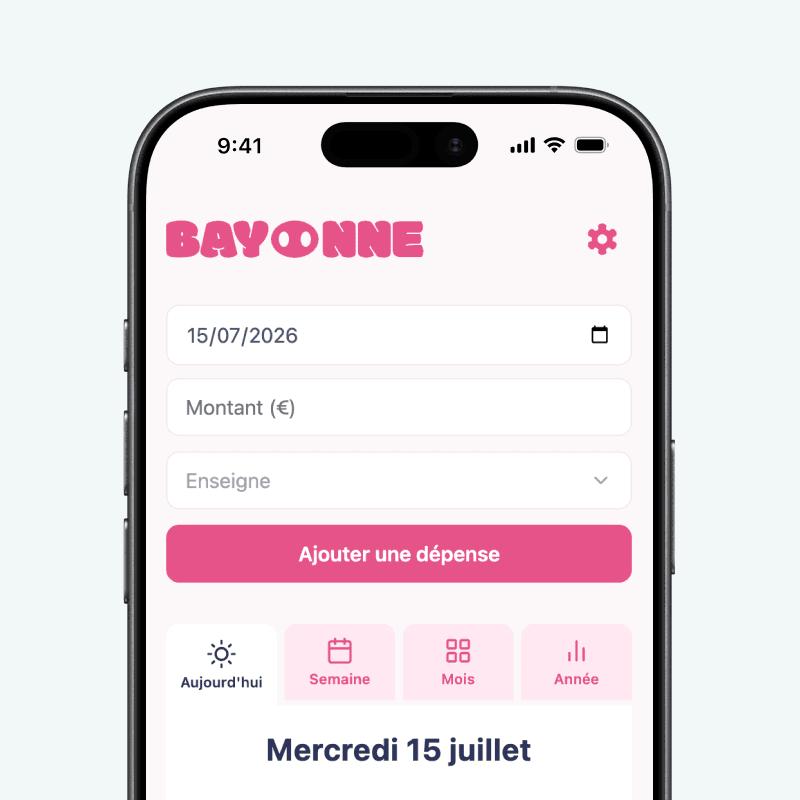
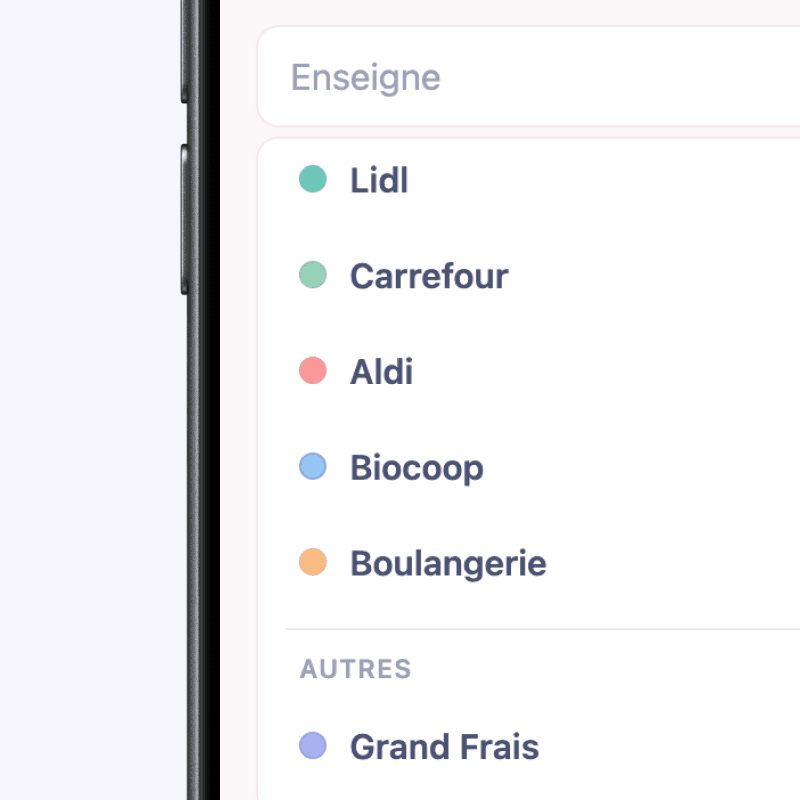
From month to week.
“A monthly budget is too big to be useful day to day.”
The weekly envelopes
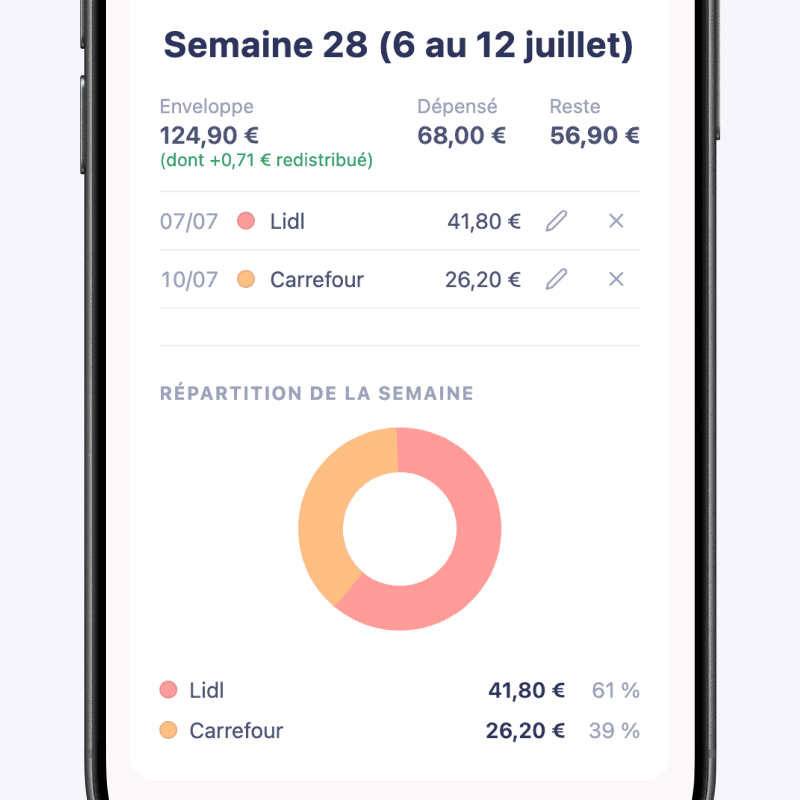
A monthly budget is one big, far-off number. The real everyday question is: how much can I spend this week? A monthly cap never answers it, and a single big slip breaks the rest of the month.
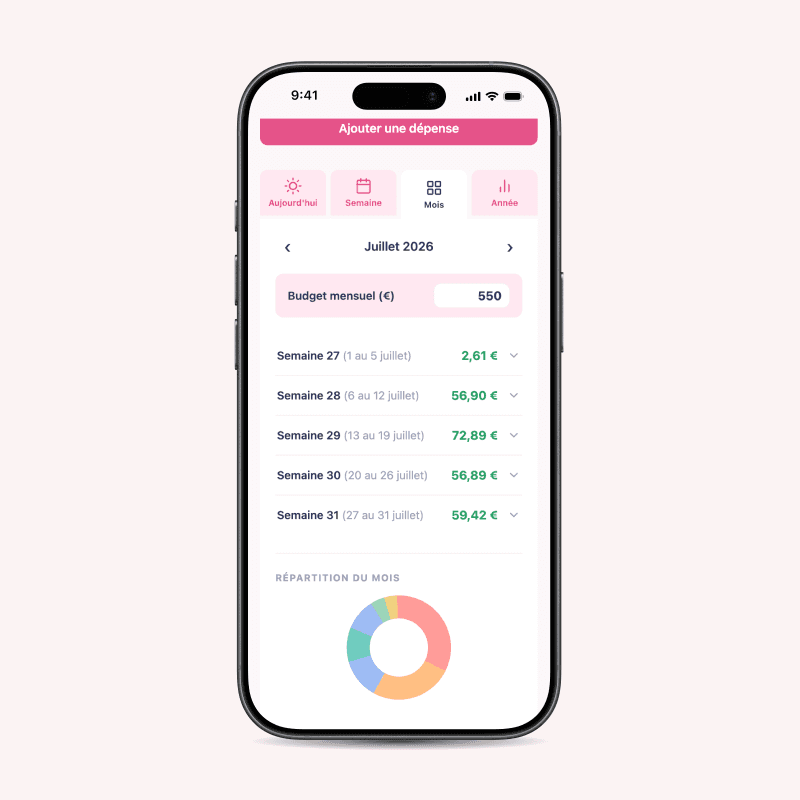
Split the budget into weekly envelopes, prorated by the days each week holds. They rebalance against each other: an overspend or a saving carries over to the following weeks, so the month always adds back up. Only the timing differs: the overspend live, the saving once the week is done.
I let go of the single monthly cap (simpler, but blind day to day) and of redistributing savings live, which caused a stressful yo-yo. The rule came out of a real week blown by 130€, where the budget suddenly meant nothing.
“Automate too much, and you decide for people.”
Automatic or deliberate
To stay light, the app has to remove buttons. But automating everything means deciding for people, including on things that can't be undone.
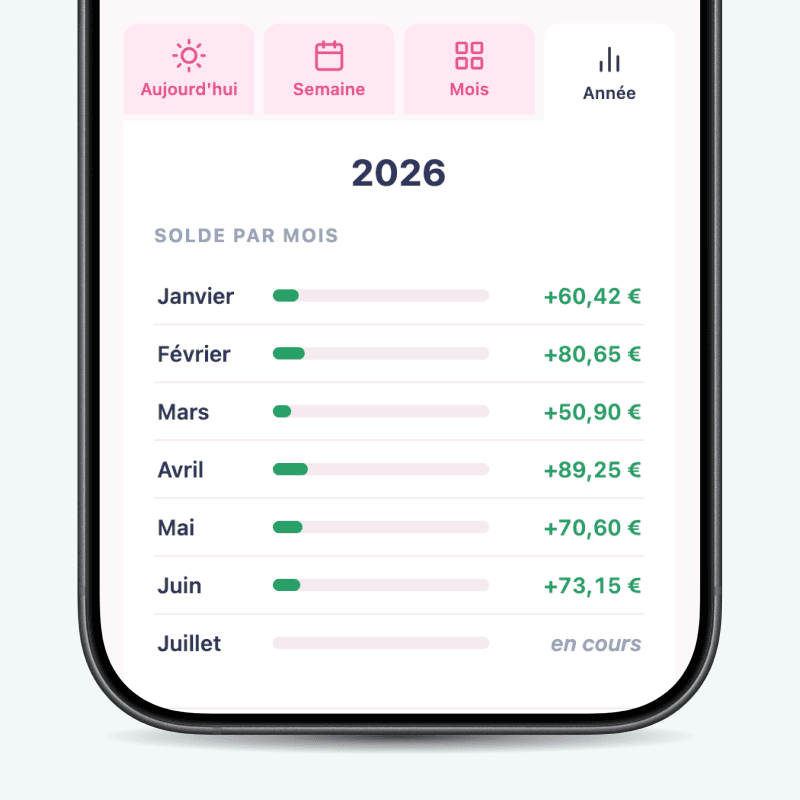
Sort the actions into two. The routine and reversible happens on its own: the week rolls over from the date, no button needed. The final stays a deliberate act: closing the month freezes the numbers and locks in the savings, so it waits for a real tap, only from the 1st of the next month. In between, expenses stay editable, because real life means fixing Tuesday's forgotten receipt.
I removed the "close the week" button (pure friction) and resisted auto-closing the month, tempting as it was: it's the one place automation would have made a call that wasn't its to make.
The outcome.

It's live, and really used.
In daily use by two people since June 2026, on a real shared grocery budget. Designed and coded solo, AI-assisted: I decided as I built and tested on the real product the same day.
Two people, no collisions.
Each expense on its own, offline first then synced: we both add at the same time without overwriting each other.
What it changes.
We feel calmer: we know where we stand, and it takes two seconds to check.
The purchase that vacuumed the budget
One month started badly: a robot vacuum had eaten the budget in the first few days, and the app showed it plainly. The robot broke, we got a refund, and the budget instantly had room again. The blow and the relief, both live: that's what takes the anxiety out.
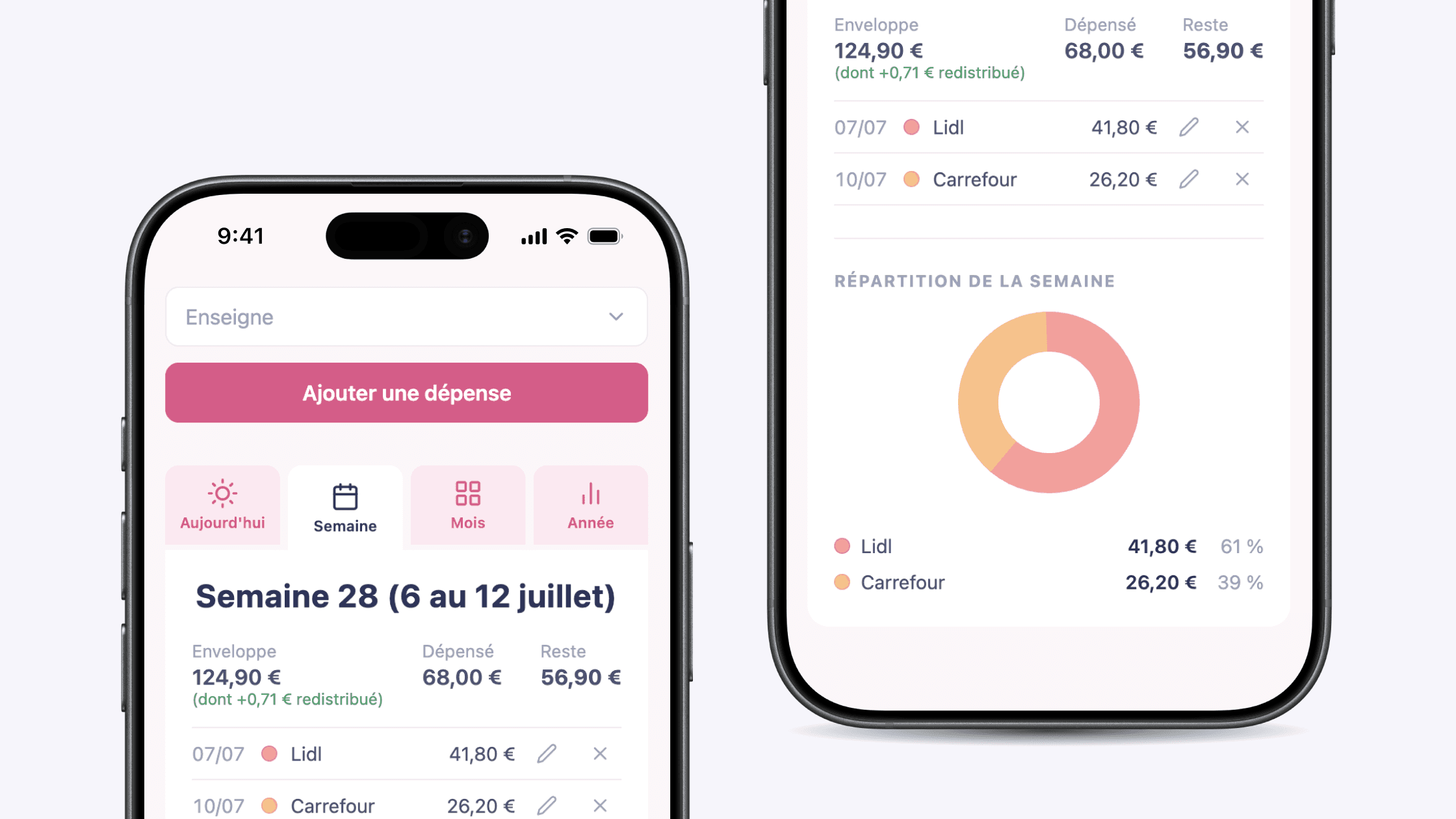
Scoped to one couple, one shared budget: not for flatmates or families with separate accounts, chosen to stay workable for two rather than lukewarm for all. CSV export dropped: no use for us, and it's the first step toward the spreadsheet we're fleeing.
A serious subject, handled with lightness.
Bayonne is Hamm, the piggy bank from Toy Story. That's where the pig snout in the icon and the app's pink come from: a wink that takes the sting out of a money subject without making a show of it.
Want to try it?
Other projects.
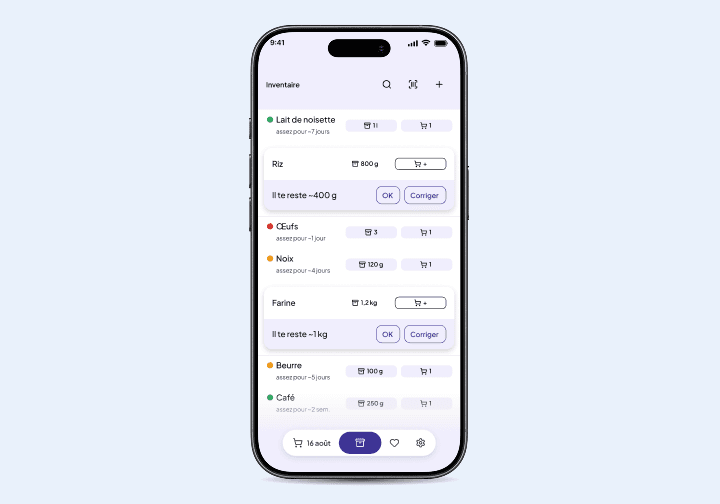
Walou
A grocery app that helps cut waste by showing what you already have at home.
View project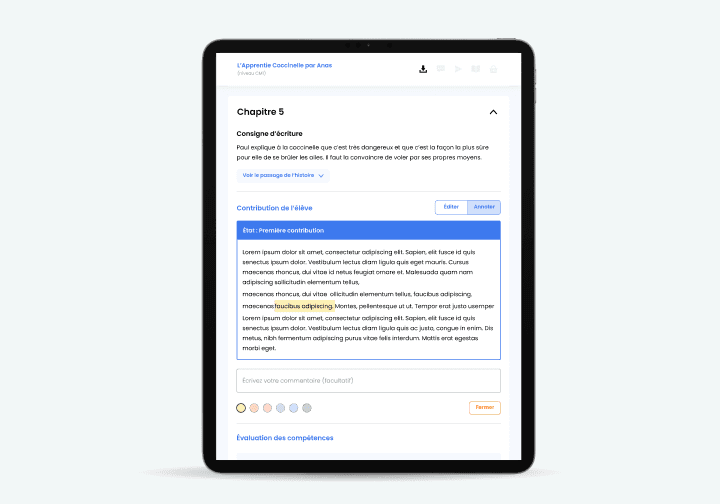
Plume
An edtech that teaches children to enjoy writing, at school and at home.
View project
MemenTop
An app that keeps daily life simple for people living with Alzheimer's and their carers.
View project